Anxiety during the menopausal transition is a fairly common experience. In fact, studies have found that more than half of women experience symptoms of anxiety during the menopausal transition. Interestingly, it’s not just women who have previously experienced anxiety who are vulnerable to experiencing anxiety during peri. In fact, some studies have actually shown that those who had the lowest levels of anxiety before menopause are actually at a greater risk for experiencing high anxiety during perimenopause.
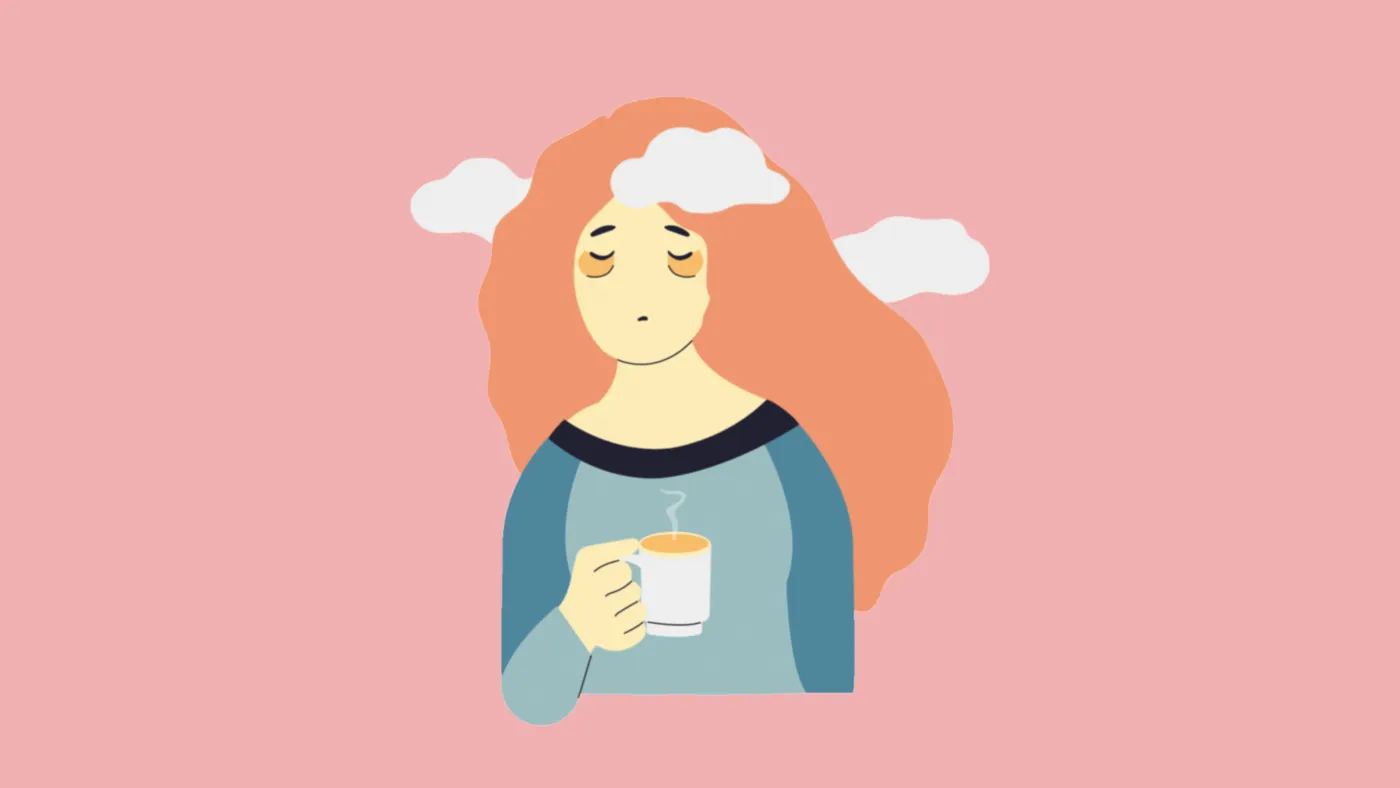
Many women in peri find that their anxiety is particularly bad in the morning. What makes morning anxiety such a common experience during the menopausal transition? More importantly, what can you do if you’re experiencing this?
There are a variety of reasons why anxiety may occur in perimenopause. However, one major reason is the balance between estrogen and cortisol. Cortisol is one of your body’s primary stress hormones. Having high levels of cortisol tends to stimulate your brain’s stress response, and many people feel anxious when their cortisol levels are up.
Estrogen reduces your body’s production of cortisol. However, during the menopausal transition, levels of estrogen drop rapidly. This can lead to increased cortisol production, which can cause anxiety. Women who have more vasomotor symptoms (like hot flashes and night sweats) are more likely to experience anxiety, probably because both of these symptoms are related to the rapid drop in estrogen.
Cortisol levels are naturally highest in the morning, peaking around when you wake up. Without the balancing effects of estrogen and progesterone, the morning peak in cortisol may be even higher. This tends to lead to feelings of anxiety during this morning period.
In addition, both estrogen and progesterone help to regulate the brain’s production of various chemicals that influence mood, such as serotonin and dopamine. When the levels of these hormones drop rapidly, this can shift the brain’s production of these chemicals, which can lead to increased anxiety.
Anxiety can cause a variety of symptoms, including:
Feeling nervous, restless, jittery, or frustrated
An inability to sleep
A sense of impending doom
Rapid heartbeat
Rapid breathing
Headache
Nausea or other discomfort in the stomach
Feeling lightheaded
Trembling, tension, or weakness in the muscles
What can you do to reduce morning anxiety during perimenopause?
Just knowing that your symptoms of morning anxiety are related to hormone levels may be helpful. It can sometimes be easier to deal with anxiety when you know that it has a physiological cause. Studies have shown that, for women who experience anxiety during the menopausal transition, the symptoms will usually get better after menopause is complete.
However, anxiety can be a very uncomfortable experience, and many women are looking for a way to reduce it. There are a few different options you can try:
Hormone replacement therapy (HRT). Because anxiety in peri is believed to be related to hormone levels, hormone replacement may be helpful for some women. Research has not been consistent regarding the effects of HRT on anxiety, but some women may find it helpful. It’s definitely been shown to help with symptoms like hot flashes, which many women with anxiety are also experiencing.
Exercise in the morning. Getting some exercise as soon as you wake up can help to relieve feelings of restlessness, and may help to burn off excess energy. It can also help to stabilize your mood.
Breathing techniques. There are various breathing techniques that can be used to help calm anxiety when it arises. These generally involve breathing slowly and deeply. Learning these techniques may be helpful, so that you can use them when you start to feel overwhelmed.
Reducing caffeine. Caffeine increases cortisol levels, which can make morning anxiety worse. If you’re experiencing anxiety, you may want to consider skipping your morning coffee, or delaying it until later in the morning when your cortisol levels have started to drop.
Therapy. You don’t have to deal with anxiety alone. Therapy can be very helpful for many people who experience anxiety. Your therapist will help you to learn techniques for dealing with anxiety, as well as uncovering unhealthy thought patterns that may be making you more anxious.
Although anxiety during peri is very common, it can sometimes be an indication of a serious mental health problem. If your anxiety is severe or if you’re experiencing panic attacks, please reach out to your doctor right away to talk about this. People of any age can develop an anxiety disorder, including women in perimenopause. It’s important to take mental health seriously, and to reach out for help when you need it.
Disclaimer: This is not medical advice, does not take the place of medical advice from your physician, and is not intended to treat or cure any disease. Patients should see a qualified medical provider for assessment and treatment.
Sources
Jaeger MB, Mina CS, et al. Negative affect symptoms, anxiety sensitivity, and vasomotor symptoms during perimenopause. Braz J Psychiatry. 2021 May-Jun; 43(3): 277–284. doi: 10.1590/1516-4446-2020-0871
Bromberger JT, Kravitz HM, et al. Does Risk for Anxiety Increase During the Menopausal Transition? Study of Women’s Health Across the Nation (SWAN). Menopause. 2013 May; 20(5): 488–495. doi: 10.1097/GME.0b013e3182730599
Walf AA, Frye CA. Effects of Two Estradiol Regimens on Anxiety and Depressive Behaviors and Trophic Effects in Peripheral Tissues in a Rodent Model. Gend Med. 2009 Apr; 6(1): 300–311. doi: 10.1016/j.genm.2009.04.004
Hantsoo L, Epperson CN. Anxiety Disorders Among Women: A Female Lifespan Approach. Focus (Am Psychiatr Publ). 2017 Spring;15(2):162-172. doi: 10.1176/appi.focus.20160042
Sharma A, Davies R, et al. The effect of hormone replacement therapy on cognition and mood. Clin Endocrinol (Oxf). 2023 Mar;98(3):285-295. doi: 10.1111/cen.14856
Fincham GW, Strauss C, et al. Effect of breathwork on stress and mental health: A meta-analysis of randomised-controlled trials. Sci Rep. 2023 Jan 9;13(1):432. doi: 10.1038/s41598-022-27247-y
Carpenter JK, Andrews LA, et al. Cognitive Behavioral Therapy for Anxiety and Related Disorders: A Meta-Analysis of Randomized Placebo-Controlled Trials. Depress Anxiety. 2018 Jun; 35(6): 502–514. doi: 10.1002/da.22728
If only our vows went like this: “In sickness and in health, for richer or poorer, in good times and in bad, and in menopause…” The reality is, divorce rates are rising in the United States, and there are so many different factors that cause couples to go their separate ways. But many women wonder,…
Medically reviewed by Patricia Shelton, MD Many women find that their sleep suffers during perimenopause. When you’re not sleeping well, it can affect every other aspect of your life, from your mood and energy levels to your ability to think clearly and remember things. Not getting enough high-quality sleep can have a huge negative impact…
Medically Reviewed by Dr. Patricia Shelton, MD During perimenopause and after menopause, many women experience symptoms like vaginal dryness and pain during intercourse. These are symptoms of vaginal atrophy, which affects around half of all postmenopausal women. This condition occurs because when the body’s estrogen levels drop, the tissues of the vagina become thinner. What…
By Lemetria Whitehurst RN Periods. Let’s admit we have a love/hate relationship with them. For some it is a good reassurance that everything is according to plan. For others an unnecessary visitor every month. With perimenopause your period can become more irregular. It is actually one of the most telling sign and symptoms. Spotting but…
By Lemetria Whitehurst RN It’s hard enough to figure out what exactly is happening during menopause, let alone trying to make sense of weird symptoms like itching. This mysterious symptom can be highly uncomfortable and annoying whether you’re experiencing it on your skin, scalp, or even privates. In this blog post, we will explore why…
Postmenopause can be defined by dissecting the word itself. The Latin word “post” means “after”, thus it means literally “after menopause”. It is not necessarily an event, but rather a time frame. Being postmenopausal inhabits a block of time in menopause and marks the last chapter in the journey of passing our childbearing years. Briefly,…
Many realize they are in perimenopause when they become bombarded with new, often unpleasant symptoms that affect their day-to-day. We are all unique in how we experience perimenopause, but there are 34 symptoms of menopause that women in this transition can experience. Read on to gain a deeper understanding of each of these symptoms that you may…
Internal vibrations or tremors can be a disconcerting symptom. They are talked about in our perry community very often. Unlike external tremors, internal tremors are unseen and cannot be felt on the outside of your body. These invisible sensations are often felt in your trunk, arms, and legs. Some people also feel them in their…
In our expert Q&A with Suzie Welsh – founder of Binto and a women’s health and fertility nurse – we finally get the answers to our most pressing supplements questions. 1. What are the most important supplements during perimenopause? The most important supplements I recommend taking for perimenopause and menopause support are the ones that…
Because the symptoms in perimenopause can be so nebulous, women can feel unwell during their menopause journey. Often, women even feel sickly because of the nature of the symptoms they endure. But keep in mind there are so many factors that contribute to the way you feel during your menopause years. From work and family…
It is not a clean, easy split when we say goodbye to our ovarian function. Most of us struggle physically, mentally, and emotionally in the years before we can officially say the final goodbye to our menstrual period. And, this separation is often met with a slew of emotions. Some women are thrilled to see…
Depression is a common symptom experienced by women in perimenopause. And while there is little scientific evidence suggesting that perimenopause causes depression, doctors and scientists alike are well-aware that hormonal imbalance can cause depression in women. Even though depression is one of the symptoms of perimenopause, it does not mean that you have to suffer through…
Women go through different stages as they progress through their menopausal years. There are four different stages: premenopause, perimenopause, menopause, and postmenopause. Perimenopause can feel like a rocky road to menopause because it is met with some intense perimenopause symptoms. Typically, women are more prepared for menopause because it is talked about more openly compared to perimenopause. Unfortunately, many women are caught off guard by how they feel and what they feel for almost a decade before reaching menopause. What is perimenopause? Perimenopause marks the beginning of a woman’s transition into menopause. The word itself means “around menopause.” Some people refer […]
Getting Perimenopause Ready: What to Know Before the Changes Begin Perimenopause can arrive before many women expect it. A subtle shift in your period. Waking up in the middle of the night for no obvious reason. Feeling more irritable than usual. Changes in your body that are easy to dismiss individually, but together may be…
Why Anxiety Can Spike in Perimenopause — Even If You’ve Never Been Anxious Before “I just don’t recognize myself anymore.” For many women, anxiety is one of the most surprising symptoms of perimenopause. You may never have considered yourself an anxious person before, and then suddenly you feel more worried, irritable, overwhelmed or emotionally reactive…
The 3 A.M. Wake-Up in Perimenopause: Why It Happens and What Can Help It’s 3 a.m. You’re awake. One of the most talked about topics in the Perry Community Maybe you’re hot. Maybe you needed to use the bathroom. Or maybe there seems to be no reason at all. But now your brain has switched…
Talk anxiety and mood through with someone who gets it
Every provider here has completed the Perry Academy Perimenopause Certificate®. This article is information, not medical advice — a provider can tell you what fits your situation.